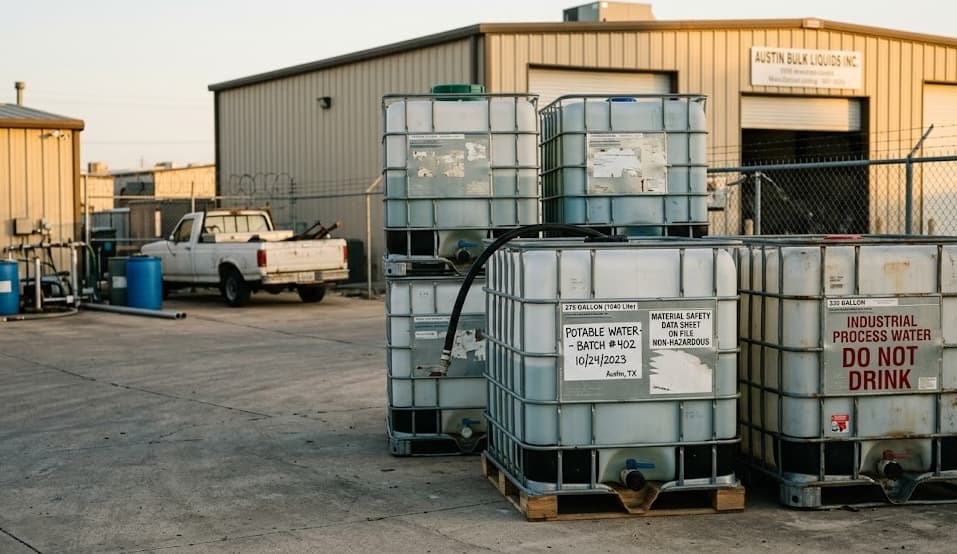
IBC Tank Recycling & Disposal
When an IBC tank truly can't be reconditioned for reuse, we don't send it to the landfill. We disassemble every container and recycle each component separately — HDPE plastic goes to pellet manufacturers, steel goes to scrap processors, and wood gets chipped for mulch or biomass.
Schedule a Recycling Pickup
We'll pick up and responsibly recycle your end-of-life IBC tanks.
Our Recycling Process
Disassembly
Each IBC is carefully disassembled into its three main components: the HDPE plastic bottle, the galvanized steel cage, and the wood or plastic pallet.
HDPE Plastic Processing
Bottles are cleaned, shredded, and processed into flakes or pellets. These become raw material for new plastic products — pipes, lumber, containers, and more.
Steel Cage Recycling
Galvanized steel cages are processed through our scrap metal partner. The steel is melted and reformed into new products, closing the material loop.
Pallet Recovery
Wood pallets in good condition are repaired and resold. Damaged pallets are chipped into mulch or processed for biomass energy production.
Valve & Fitting Salvage
Working valves, caps, and fittings are cleaned and quality-tested for reuse as replacement parts. Nothing usable goes to waste.
Residue Management
Any liquid residue is identified, contained, and disposed of according to EPA regulations. Proper chain-of-custody documentation maintained throughout.
Recycling by the Numbers
Compliance & Documentation
All recycling operations comply with EPA regulations and South Carolina Department of Health and Environmental Control (DHEC) guidelines. We provide recycling certificates for every batch processed, which you can use for your own environmental reporting and sustainability audits. Chain of custody is maintained from pickup through final processing.
What We Accept
We recycle IBC tanks in virtually any condition. If you're unsure whether your tanks qualify, contact us — we'll figure it out together.
End-of-Life Tanks
Tanks that have reached the end of their usable service life due to age, UV degradation, or material fatigue. We break them down for full component recycling.
Damaged Tanks
Cracked bottles, bent cages, broken valves — it doesn't matter. Damaged tanks that can't be reconditioned are perfect candidates for our recycling program.
Cages Only
Have steel cages without bottles? We accept bare cages for steel recycling. Great for operations that have already removed and repurposed the inner bottle.
Bottles Only
HDPE bottles without the cage or pallet are accepted for plastic processing. We shred and pelletize them for use in new manufactured products.
Contaminated (with Restrictions)
Tanks that held non-hazardous chemicals, soaps, or food products are accepted. Hazardous residues require pre-approval — call us to discuss specifics.
Bulk Facility Cleanouts
Closing a facility or clearing a yard full of old IBCs? We handle large-scale cleanouts with full logistics, from pickup scheduling to recycling certificates.
Environmental Impact
Every tank recycled keeps hundreds of pounds of material out of landfills. Here's what your recycling commitment actually saves.
| Tanks Recycled | Plastic Saved (lbs) | Steel Saved (lbs) | CO₂ Avoided (kg) | Water Saved (gal) |
|---|---|---|---|---|
| 1 | 24 | 33 | 45 | 180 |
| 10 | 240 | 330 | 450 | 1,800 |
| 50 | 1,200 | 1,650 | 2,250 | 9,000 |
| 100 | 2,400 | 3,300 | 4,500 | 18,000 |
Estimates based on standard 275-gallon IBC tanks. Actual savings vary by tank condition and component weights.
Recycling FAQ
Do you charge a fee to pick up tanks for recycling?
For quantities of 10 or more tanks, pickup is free within our local service area. For smaller quantities or locations outside Horry County, a modest transport fee may apply. Contact us for a quote.
Can you recycle tanks that held chemicals?
Yes, we recycle tanks that held non-hazardous chemicals, soaps, fertilizers, and similar substances. Tanks that held hazardous materials require pre-approval — call us to discuss the specifics of what was stored.
Do you provide recycling certificates or documentation?
Absolutely. Every batch we process comes with a recycling certificate that details the number of tanks, materials recovered, and disposal method. These are useful for sustainability reporting and environmental audits.
What happens to the plastic after recycling?
The HDPE plastic is cleaned, shredded into flakes, and then pelletized. These pellets are sold to manufacturers who use them to make new products like plastic lumber, drainage pipes, and non-food containers.
Can I drop off tanks at your facility instead of scheduling a pickup?
Yes, we accept drop-offs during business hours at our Myrtle Beach facility. No appointment needed for fewer than 10 tanks. For larger quantities, please call ahead so we can have space and equipment ready.
How is recycling different from reconditioning?
Reconditioning cleans and restores a tank for reuse as a functional container. Recycling breaks the tank down into raw materials — plastic pellets, scrap steel, and wood chips — that become feedstock for new products. We always try to recondition first and only recycle tanks that truly can't be reused.